Air Products Membrane Solutions secures the first certification for membrane nitrogen systems under new IACS rules
1/15/26
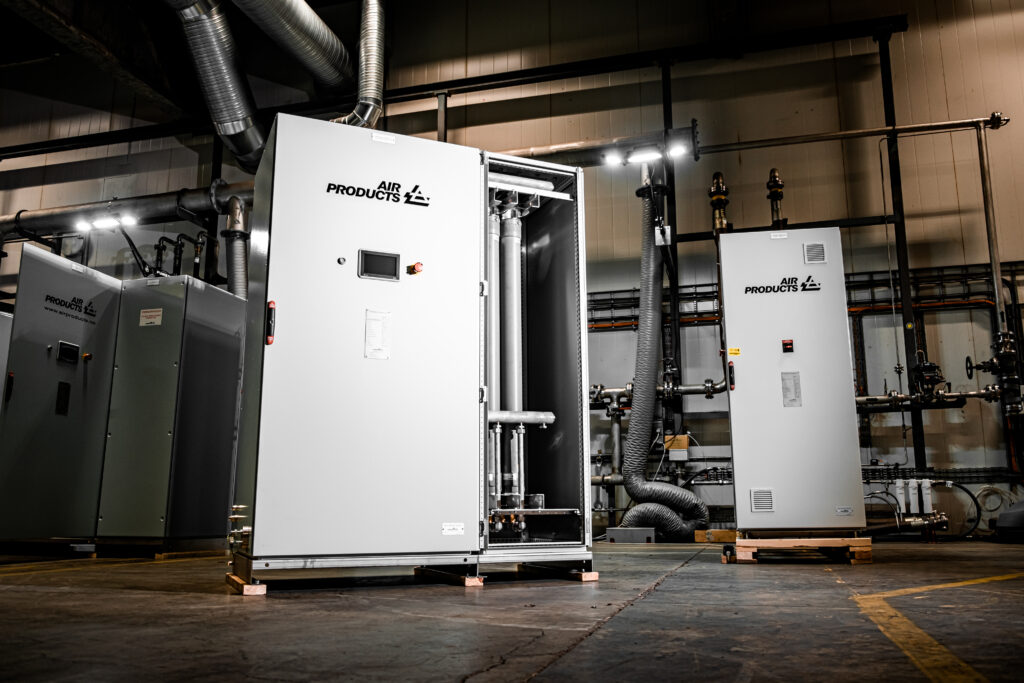
On 15 January 2025, Air Products Membrane Solutions recently announced that it is the first company to obtain cybersecurity certification for maritime nitrogen systems under the International Association of Classification Societies’ (IACS) Unified Requirements E26 and E27, achieving a new industry benchmark for cyber resilience at sea.
“Securing the IACS cybersecurity certification positions our systems as a trusted choice for shipowners and operators to safeguard their vessels against cyber threats,” said Dr. Erin Sorensen, General Manager, Air Products Membrane Solutions. “This certification reflects Air Products Membrane Solutions’ commitment to security and enhances our market competitiveness. It’s a strategic advantage that reinforces our commitment to delivering secure, future-ready solutions to the maritime sector.”
IACS Unified Requirements (UR) E26 and E27 establish minimum cybersecurity standards for new vessels by focusing on UR E26 for the ship as a whole and UR E27 for individual on-board systems and equipment.
A 2024/2025 cybersecurity report by DNV Cyber stated that 31 percent of maritime professionals reported experiencing at least one cyberattack in the 12 months leading up to October 2024, a significant increase from 17 percent five years earlier.
Air Products Membrane Solutions has a long history of innovation in the maritime industry. Air Products Membrane Solutions was the first company to install a membrane-based nitrogen generation system onboard a ship in 1984. Today, more than 2,500 ships from over 50 countries utilize Air Products Membrane Solutions’ nitrogen generators, which are designed and manufactured at Air Products’ facility in Norway.
Air Products Membrane Solutions’ membrane-based nitrogen generation systems enable large ships to efficiently switch from traditional heavy fuels to cleaner alternative fuels while at sea, resulting in reduced emissions during the transport of goods.